3D LiDAR-based Fragmentation solution
A fragmentation analysis solution purpose-built for the modern digital era of mining.
This new 3D LiDAR-based Fragmentation solution combines LiDAR-captured iPhone and iPad 3D point cloud, backend ingestion, QA review, and evolving analysis pipelines to support more repeatable post-blast fragmentation analysis.
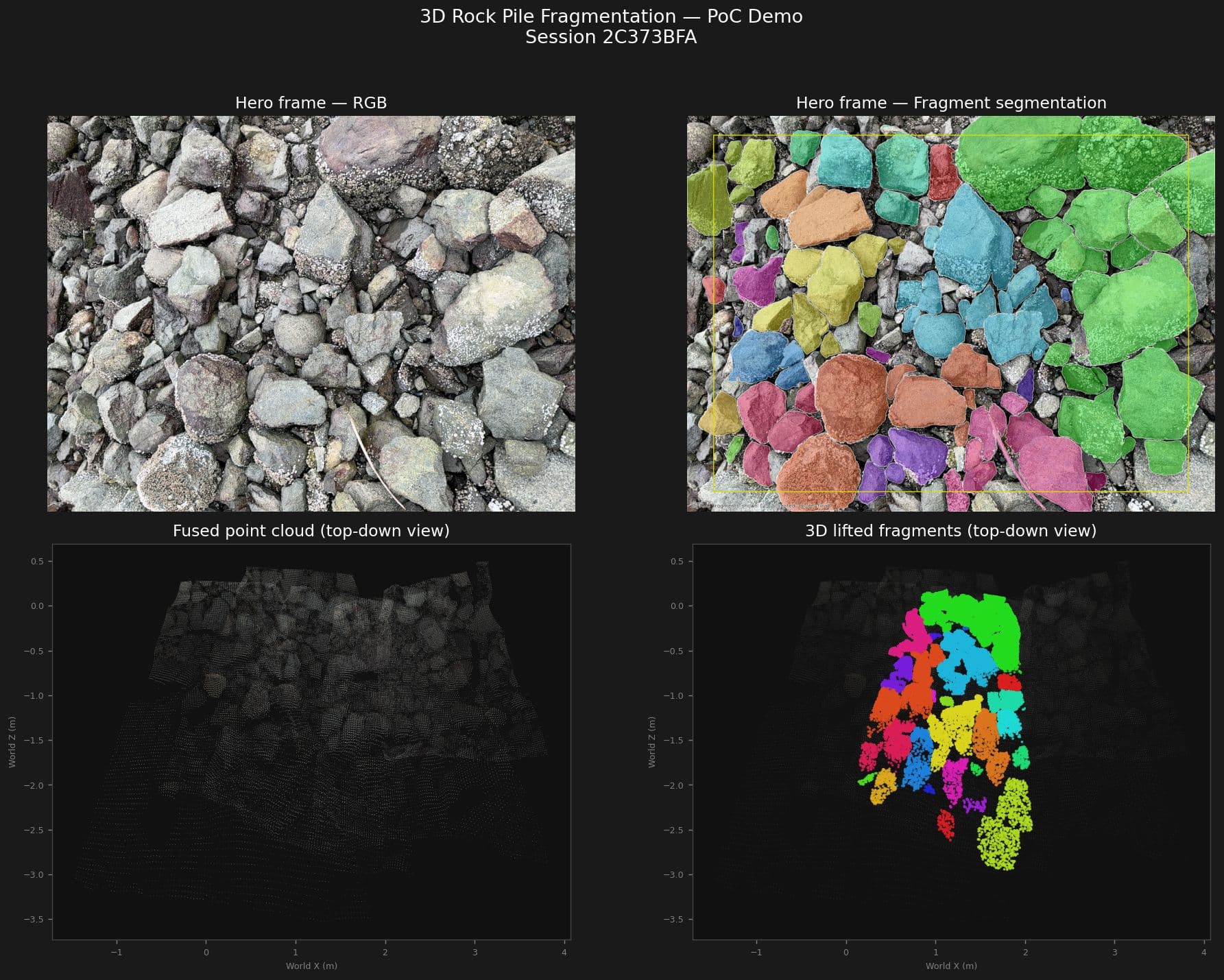
With the rapid advancement of digitally capable personal devices, this solution leverages built-in LiDAR sensors to introduce a new layer of information to field data capture. This approach significantly enhances rock fragmentation analysis, which has traditionally relied on static images with limited depth information. Beyond improving accuracy, the solution utilizes existing hardware, reducing the need for additional capital investment, while naturally benefiting from ongoing improvements in each new generation of personal devices.
What this enables
- Moves fragmentation measurement toward a traceable digital workflow instead of ad hoc visual estimation.
- Uses widely available LiDAR-capable Apple devices to reduce reliance on specialized field hardware in the first deployment path.
- Supports a future path toward reviewer workflows, auditability, and secure enterprise procurement.
Best fit for
- Mining teams evaluating post-blast measurement workflows for piles and stockpiles.
- Operations or technical groups that need capture QA, repeatability, and backend traceability.
- Pilot programs that need a credible mobile starting point without re-architecting for security later.
Capabilities
LiDAR-guided capture on approved Apple hardware
The workflow is built around LiDAR-enabled iPhone and iPad devices so field teams can capture structured pile and stockpile sessions with a practical mobile kit in the first deployment path.
Offline-capable field workflow with QA
The current MVP already includes on-device QA, local asset retention, upload retry behavior, result polling, and session-level visibility into capture and analysis state.
Built for validation, security, and review
The broader system includes backend ingestion, result versioning, validation protocols, and security planning so the capability can mature into a trustworthy workflow that stands up to operational review.