
Aircraft / Payload / Edge / Operations
A UAV is more than an aircraft.
We bring the aircraft, payload, electronics, onboard computing, operator workflow, and long-term support together as one purpose-built system.
Whole-system engineering
We design around the mission, not around a catalogue.
We begin with the payload, operating environment, endurance needs, data outputs, and operator workflow. From there, we shape the aircraft and the systems around it.
Aircraft
We shape the airframe, propulsion, flight control, power, and payload fit around the work the aircraft needs to do.
Payload
Sensors, optics, active ranging, gimbal mechanics, power, calibration, and vibration control are integrated as one payload.
Edge compute
Onboard processing keeps essential sensing and data work close to the aircraft and connected to the wider system.
Operations
Ground control, telemetry, operator cues, data review, handoff, maintenance, and upgrades complete the field system.
OLAD / Object-Local Active Depth
Measured depth, tied to what the operator sees.
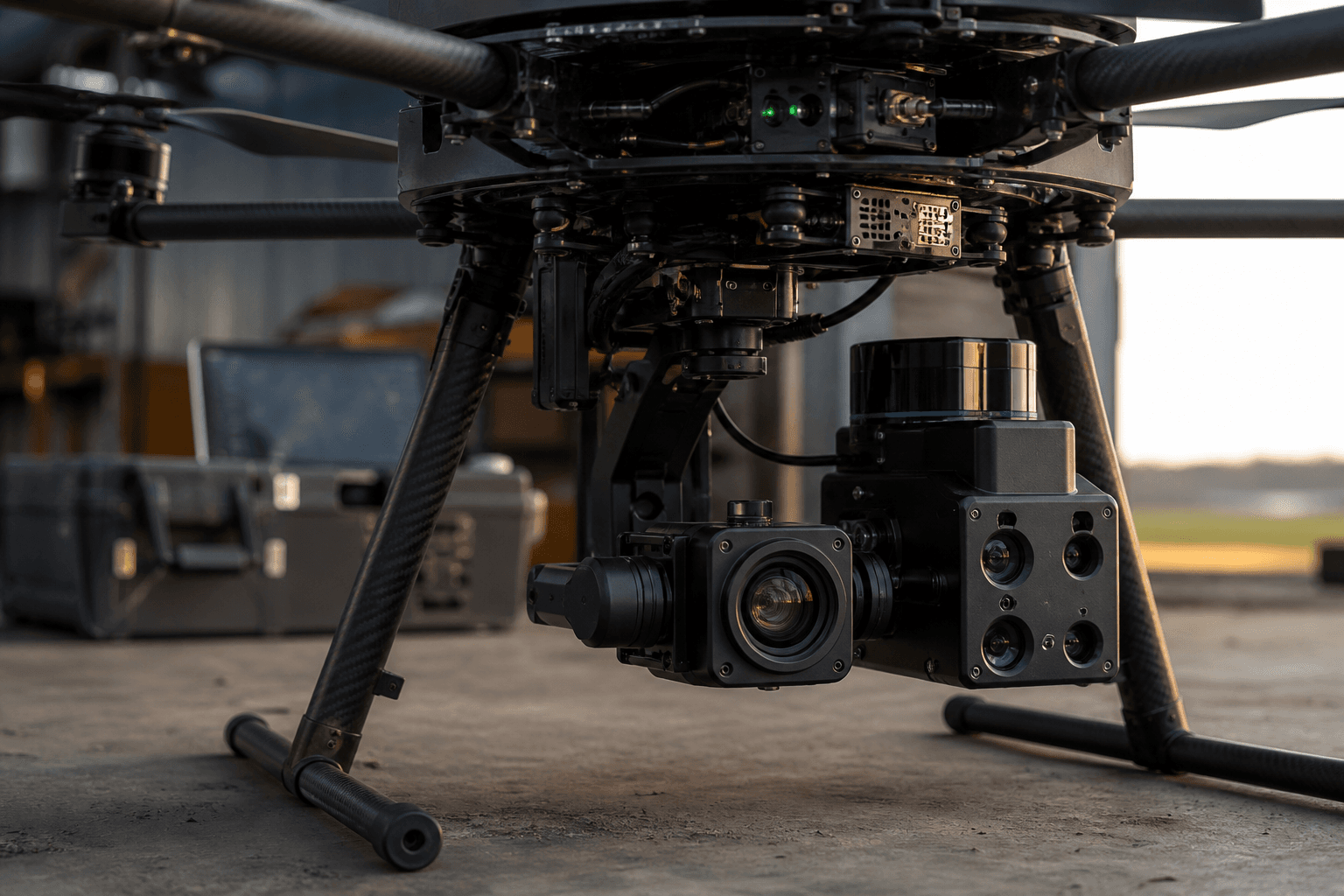
Video gives an operator valuable context, but it does not always provide a reliable distance to the object that matters. OLAD brings camera imagery and active ranging together so measured depth stays connected to what the operator is watching.
The operator can select objects or regions in the video feed and follow them as the scene changes. The system manages range updates around movement, visibility, and the quality of the available information, while keeping those cues clear on screen.
Track what matters
Each selected object keeps its own identity, priority, range age, and confidence information as the scene changes.
Range the object
Calibrated range samples are tied to the selected object or region, not treated as a number at the centre of the screen.
Refresh intelligently
Range is refreshed when motion, occlusion, age, geometry, or navigation quality begins to reduce confidence.
Keep people informed
The operator can see the age and quality of the information and recognize when conditions have changed.
Operator system
The mission continues after takeoff.
Planning, telemetry, payload control, operator cues, review, and maintenance all shape whether a UAV becomes a dependable field tool or simply another aircraft.
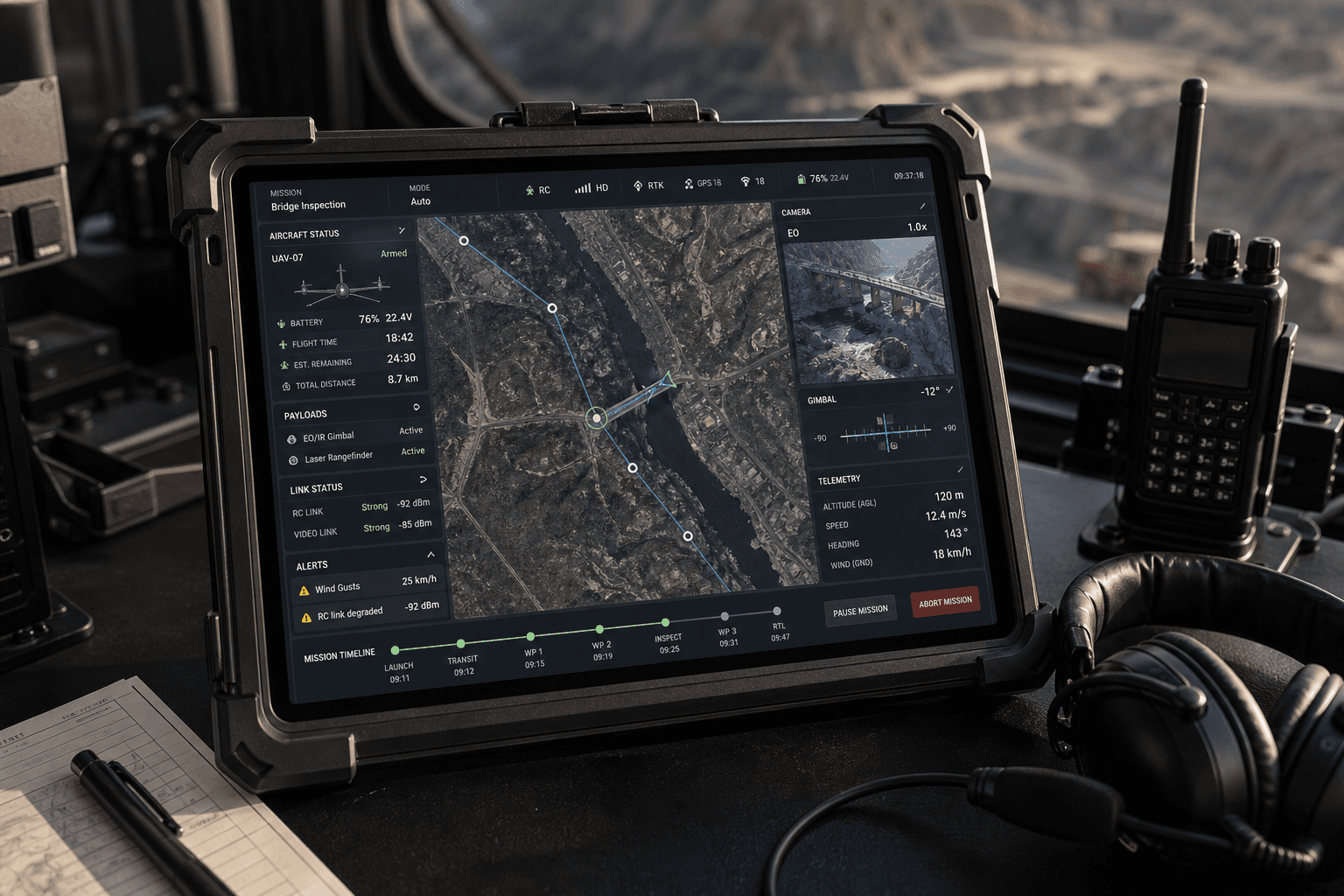
Live operations
Aircraft health, payload data, telemetry, and mission context belong in one operator workflow.
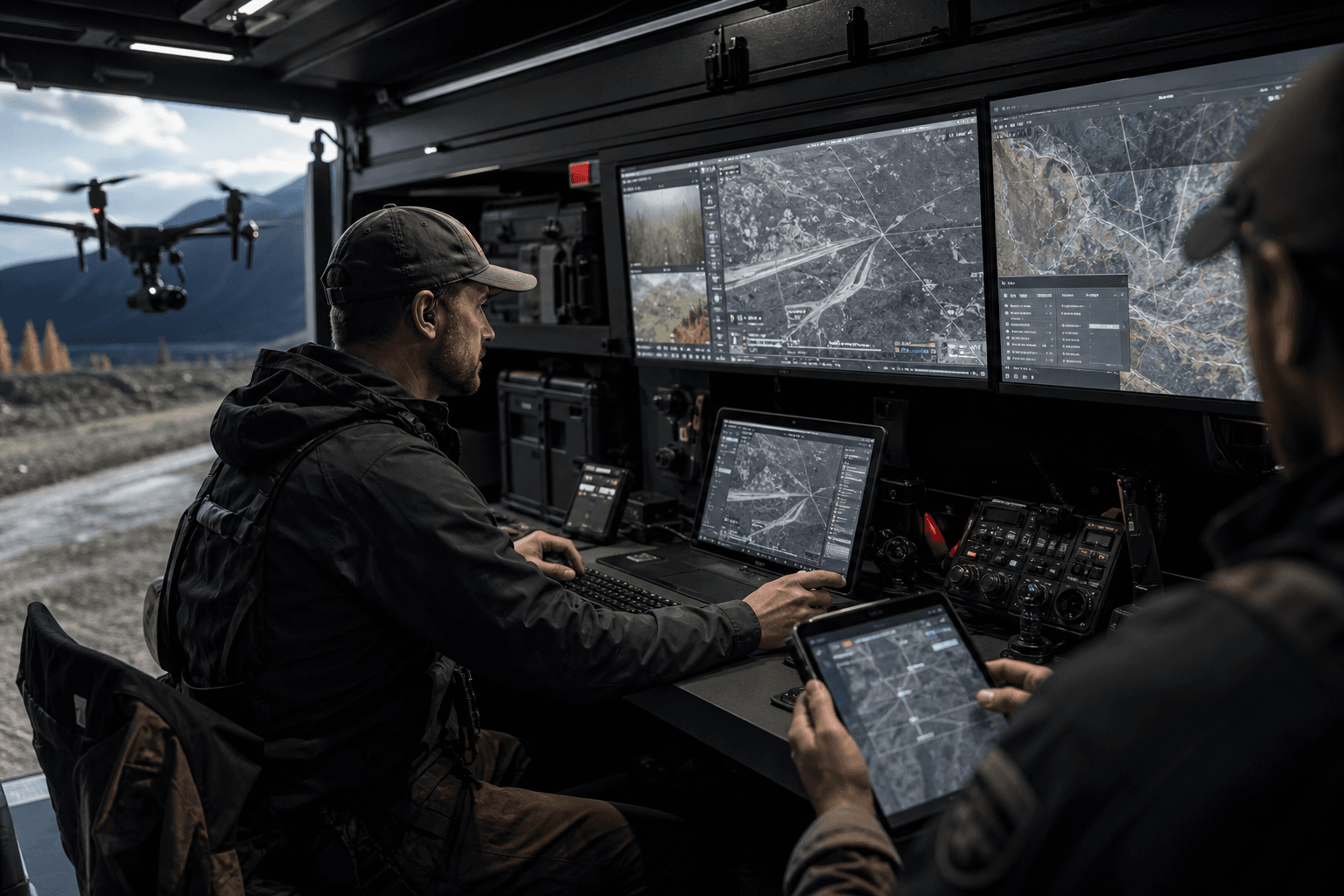
Field support
Handoff, operating procedures, maintenance, and feedback are designed into the deployment.
Configured to fit
Start with the job the system has to do.
Infrastructure inspection and mapping
Object-local ranging and situational awareness
EO, thermal, LiDAR-class, and custom payload integration
Canadian flight controllers and ESCs
Field data capture and review workflows
Operator handoff, maintenance, repair, and upgrades
Program path
From requirements to a supported field configuration.
Define the mission
Payload, environment, data outputs, operator workflow, regulatory path, and support expectations become the system requirements.
Engineer the configuration
Aircraft, payload, flight electronics, controls, interfaces, and ground workflow are selected or designed together.
Integrate and test
Bench, ground, and flight tests show how the complete configuration behaves and where it needs refinement.
Handoff and support
Operator training, maintenance, repair planning, upgrade paths, and field feedback continue after the first build.
Custom UAV programs
What does your aircraft need to carry, see, and deliver?
Aircraft selection, payload configuration, performance targets, schedule, pricing, and regulatory path are confirmed during program scoping.